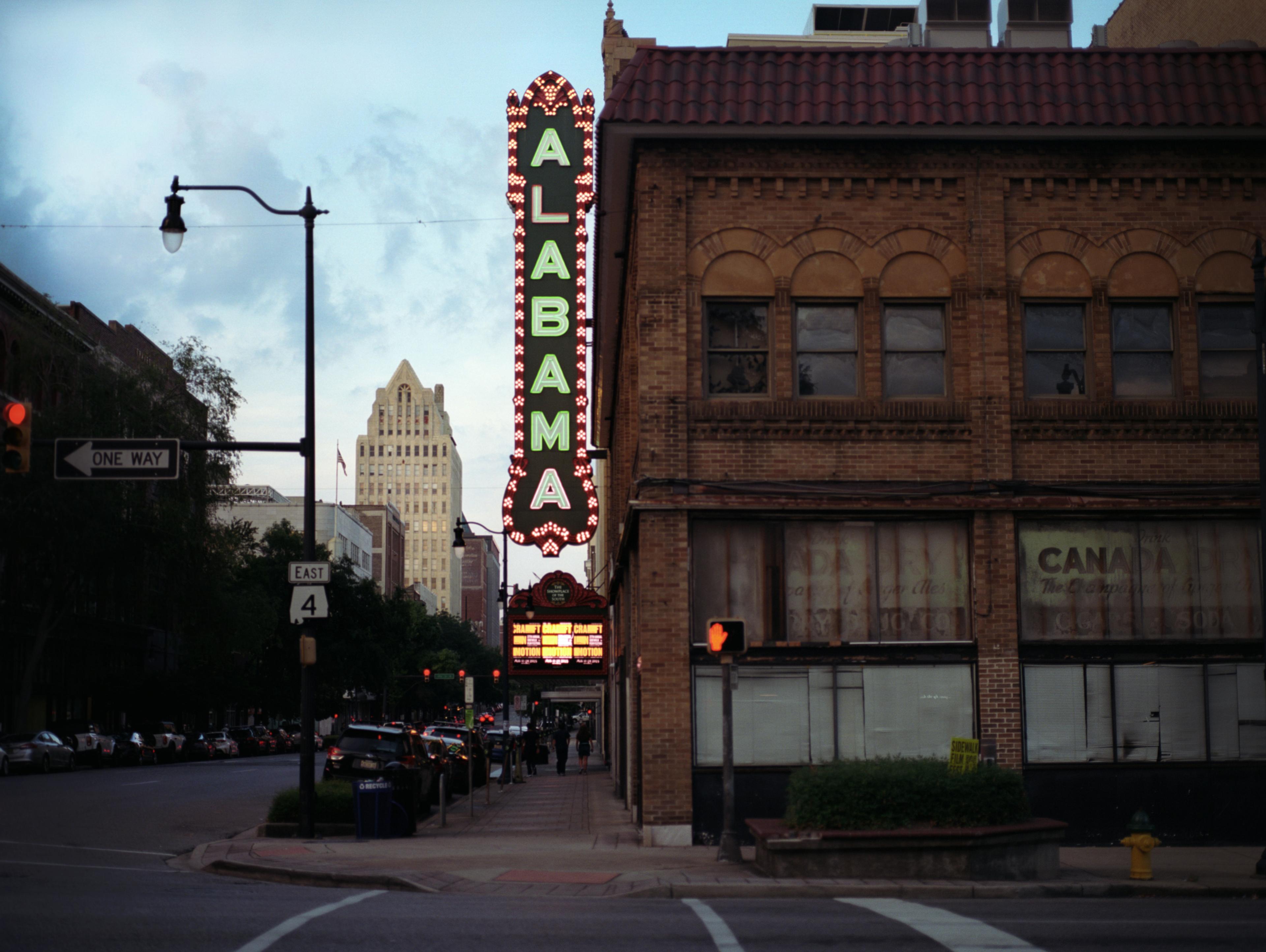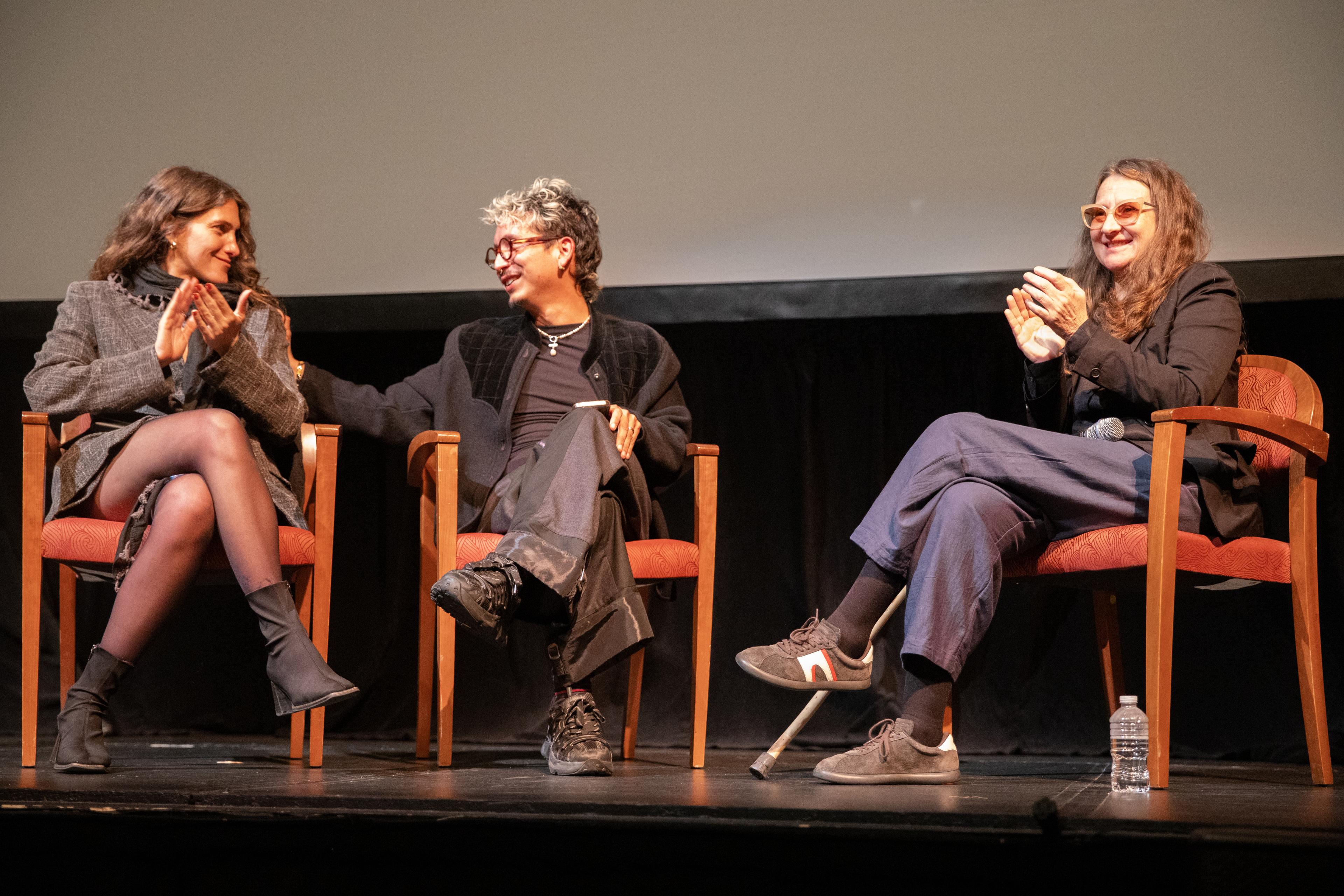
In September, Communications Manager Mariana Sanson attended the 21st annual Camden International Film Festival in order to celebrate C&E-supported filmmakers in the lineup and share out about the festival experience on social media. Below she reflects on CIFF’s power to meet the moment and nurture the docs and conversations that matter most now.
Whenever I attend a film festival, I feel like a fish in water. That’s because film festivals raised me. I spent my twenties working for two of the most important film festivals in Latin America, Ambulante Film Festival and Morelia International Film Festival. So I know well the rhythms of fest life: watching as many films as possible, soaking in moments of shared learning during panels and talks, hustling from venue to venue while saying hello to old and new friends… then going to bed quite late (we documentary people know how to dance), and doing it all over again the next day. The qu'est-ce que c'est of festival life.
I attended Camden International Film Festival (CIFF) for the first time this year. And it delivered those familiar, satisfying fest beats I named above. But it also proved a special, transcendent experience for me. Let me share why and how.
Cinema in a time of crises
The last year has been incredibly difficult. We have witnessed unprecedented attacks on freedom of expression and vulnerable communities in the US, both of which have imposed different levels of censorship on public media and individuals. I've been personally impacted. But where I go to feel empowered and find answers is the cinema. I crave being surrounded by films—the thoughts they inspire and the community they create.
CIFF offered a space where I could process what’s happening in the world with the benefit of different perspectives. Together, all of us at the festival could acknowledge what’s happening and engage in collective problem-solving. CIFF’s values-driven programming and Maine community embrace the festival in a way bigger cities can have a hard time replicating. It was a container made up of both industry and local people alike. Plus, CIFF is quite accessible and open (pitches and parties are open to all pass holders), which makes all the difference in providing a more democratic experience.
“Cinema alone will not save us”
Last year, CIFF was one of the few film festivals that expressed solidarity with Palestinian liberation. This year, Senior Programmer Zaina Bseiso shared, “I ask myself every day if it is madness to watch cinema at a time when people are being burned alive.” Senior Programmer Milton Guillen reminded us that, “cinema, by itself, will not save us,” and that we must also think about what we owe to each other. These comments reassured me I was in the right place, because I refuse to engage with media that ignores the urgency of our times. Here I found both solidarity and fresh motivation to keep fighting for the future I desire.
Reckonings on screen
The opening night showcased Lucrecia Martel’s first documentary, Nuestra Tierra, a film about Argentina’s colonial structures, bureaucratic justice system, and the erasure of its indigenous population. During the Q&A, Lucrecia discussed who has the right to tell a story and shared her fears about not representing this one authentically as a white and well-established filmmaker. We often think about this at Chicken & Egg Films. From my perspective, her intentions and commitment were clear: to open a dialogue within a country that desperately needs to talk, repair, and heal.
The next morning, during C&E supported-filmmaker Geeta Gandbhir's masterclass, the conversation around accountability continued. Geeta works within a Do No Harm policy–because even with good intentions and careful planning, filmmakers can still negatively impact their documentary participants and beyond–and sees relationship building as a powerful antidote. Geeta also referenced Audre Lorde, saying that when we create documentaries, we are inherently using ‘the master's tools.’ How might we resignify them? Use them differently, and toward different outcomes?
Filmmaker Sky Hopinka provided more wisdom after the screening of his immersive vérité film Powwow People. Sky explained that the film serves as an invitation into something that belongs to his community and has been part of his life since childhood. He lets us see a Powwow for what it is—not for what we might expect it to be or want explained. This approach is about holding onto his agency, challenging audiences and the pressure to over-explain narratives to them.
No decisions without us
We gathered for an industry town hall to discuss building a more resilient, inclusive nonfiction media ecosystem to enable truth-telling and civic engagement. This space proved challenging for me. It seemed we spent half our time together (and most of our momentum) setting the mood rather than having the actual conversation. I get it—we’re all so rarely gathered in one place and that’s worth celebrating. But by the time facilitators made an impassioned plea for the industry to stop making decisions without BIPOC women, they were speaking to a mostly-empty room. How can we sustain our energy to be there for each other in the hard moments, when the mood-setting has passed? I wish this meeting had more time to focus on X.
The last film I watched at CIFF was Raoul Peck's Orwell 2+2=5, about the powers of the state being used to brutalize its own citizens. Built entirely from archival footage and obviously, in his words, a "film for today," Orwell 2+2=5 sparked much conversation. In the Q&A, people asked Peck what we do now, how we move forward, and if he had hope for the future. It felt clear to me that, since political leaders are failing to lead us, people are turning to artists for guidance.
An audience member invoked Geeta’s Lowndes County and the Road to Black Power, about local movement and student organizers who fought for Black Power in Lowndes County, Alabama, to ask Peck about what the leadership we need looks like right now. For me, this connected back to what Milton shared during their opening night remarks: films alone will not save us—it's us who will save us.
Films activate critical thinking, jog memory, and connect the dots that wake us up. It's on us to take the next steps. Peck reminded us that what we're experiencing right now isn't coming out of nowhere—it's been decades in the making. And that history will be shaped by what we do today. Right now, we need each other and we need to be willing to show up for each other.
What we owe to each other
Like Peck, I grew up in a subaltern country–we know the road to state violence. I walk the streets of NYC with a paper folded inside my pocket in case I'm stopped by ICE. Peck said people like us have no choice when it comes to fighting for a just world. But others in positions of greater privilege do. For some of us, survival is already resistance.
There are rough days when I question if it makes sense to continue working in documentaries. But my days at CIFF reinforced my commitment to the job I do. I know I am not alone. More than ever, I need to feel in community. CIFF offered me that, and I treasure it.
We must fund and fiercely support the filmmakers whose stories stand against the spread of fascism. That means joining forces to protect, generate, and nurture spaces like CIFF, where truth-telling still flourishes. This will demand more from us than ever before—more creativity, more courage, more care. We’ll have to reshape our models, strengthen our relationships, and stay steady through whatever comes. We don’t know what the future holds—but I believe in documentary. I believe in us. And I believe that we will win.
PS. I watched 15 documentaries at CIFF!